Source Anti Static ESD Cart for SMT Lines, Workshops, and Computer Rooms
Source 30 anti static esd cart options for SMT production lines, printing workshops, and electronic component maintenance rooms. Compare stainless steel and metal models with varying dimensions, weights, and customization features from verified suppliers in China.
Key considerations
Products List


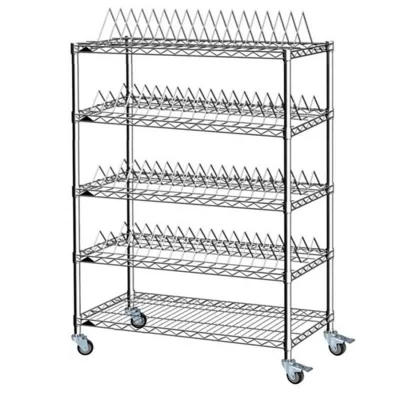
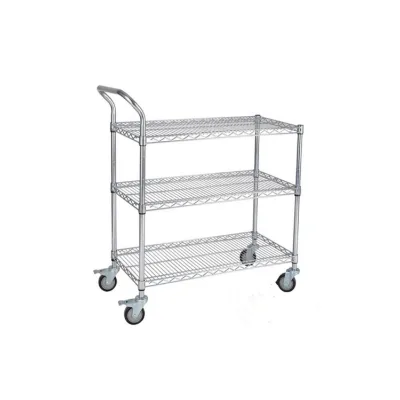
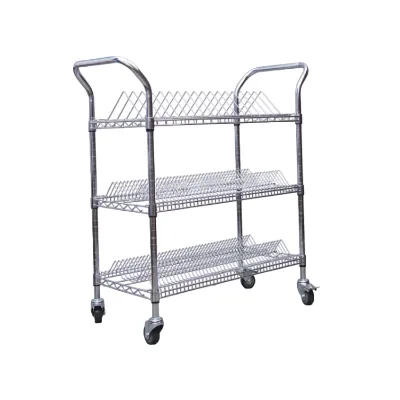


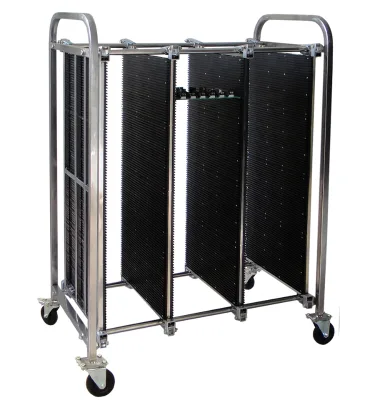


Comprehensive Sourcing Guide
Strategic Sourcing Guide for Anti-Static ESD Carts
Procuring the correct equipment for environments handling sensitive electronic components requires a rigorous approach to specification, compliance, and supplier evaluation. The anti-static ESD cart is a critical asset in SMT production lines, printing workshops, and computer rooms where electrostatic discharge can cause catastrophic failure of components. Buyers must navigate a complex landscape of material properties, dimensional constraints, and certification requirements to ensure the selected equipment meets the stringent demands of combustible and explosive areas as well as standard maintenance rooms. This guide provides a structured framework for evaluating these assets based on observed market data and technical realities.
Technical Specifications and Dimensional Analysis
The physical characteristics of an ESD cart are the primary determinants of its utility within a specific facility layout. Based on current market observations, the dimensions of these units vary significantly to accommodate different storage densities and floor space constraints. A common configuration observed in the market features a unit with a length of 900mm, a width of 550mm, and a height of 1260mm. This specific profile, often associated with models like SK350-3columns, is designed to maximize vertical storage while maintaining a footprint suitable for narrow aisles.
In contrast, other configurations prioritize different storage geometries. For instance, a model designated as SK350-4columns presents dimensions of 550mm by 530mm with a height of 1400mm. This variation suggests that the "width" and "length" are often interchangeable depending on the orientation of the cart within the production line. Buyers must verify the exact orientation of the side panels, which are observed to be 350mm in length, to ensure they fit the intended workflow.
The internal storage architecture is equally critical. The slot specifications define the capacity for holding printed circuit boards (PCBs). Observed data indicates a slot depth of 5mm and a slot width of 4.5mm, with a slot distance of 10mm between slots. These precise measurements are vital for ensuring that standard PCBs fit securely without excessive movement that could lead to damage. The storage capacity is often quantified by the number of columns and layers; for example, a 3-column configuration may support 300 PCS boards, while a 4-column variant offers different storage densities.
Mobility is another key technical specification. The carts are consistently equipped with a four-wheel system, facilitating smooth movement across various floor types. The weight of the unit is a significant factor in both stability and maneuverability. Observed weights range from 20kg to 50kg depending on the model and material composition. Heavier units, such as those weighing 40kg or 50kg, typically offer greater stability during transport but may require more effort to push if the wheels are not high-quality. The height of each floor is standardized at 70mm in some configurations, which dictates the vertical stacking capability of the cart.
Material Composition and Surface Treatment
The material selection for an ESD cart is fundamental to its ability to dissipate static electricity. The primary material observed in the market is stainless steel, which offers excellent corrosion resistance and durability. However, other variants utilize metal construction with specific surface treatments. A notable observation is the use of chrome-plated metal, which provides a smooth, conductive surface that is easy to clean and maintain.
The choice of material also influences the weight and structural integrity of the cart. Stainless steel units tend to be heavier, contributing to the 40kg to 50kg weight range observed in larger models. In contrast, lighter models weighing around 20kg or 30kg may utilize different metal alloys or thinner gauge materials. Buyers should verify the specific material grade to ensure it meets the environmental requirements of their facility, particularly if the cart will be used in areas with high humidity or exposure to cleaning chemicals.
The surface finish is not merely aesthetic; it is a functional requirement for ESD safety. The color of the carts is consistently observed as silver, which is typical for stainless steel and chrome-plated finishes. This color choice is practical as it helps in identifying dirt and debris, ensuring that the cart remains clean, which is essential for maintaining a contamination-free environment in electronic component maintenance rooms.
Compliance, Certification, and Safety Standards
Compliance with safety and environmental standards is a non-negotiable aspect of sourcing ESD carts. The market data indicates that products often carry RoHS and CCC certifications. RoHS (Restriction of Hazardous Substances) compliance ensures that the cart is manufactured without specific hazardous materials, which is crucial for environmental sustainability and worker safety. The CCC (China Compulsory Certification) mark indicates that the product meets the mandatory safety standards for the Chinese market, which is the primary origin for many of these units.
For operations in combustible and explosive areas, the ESD cart must be designed to prevent the accumulation of static charges that could ignite flammable vapors. The observed usage attributes explicitly list "Combustible & Explosive Area" as a valid application, suggesting that these carts are engineered with specific grounding and material properties to mitigate such risks. Buyers must verify that the specific model they select has the necessary grounding mechanisms and that the material properties align with the safety protocols of their facility.
While the provided data mentions the IEC 61340-5-1 standard as a background reference, it is important to treat this as a general industry benchmark rather than a guaranteed attribute of every listed product. Buyers should request specific test reports or documentation confirming that the cart meets the relevant IEC standards for electrostatic discharge control. The absence of explicit certification data for every model in the market means that verification is a critical step in the procurement process.
Cost Drivers and Pricing Dynamics
The pricing of anti-static ESD carts is influenced by a complex interplay of factors, including material costs, manufacturing complexity, and customization requirements. The observed price range in the market spans from 8.81 USD to 1300 USD, reflecting the vast diversity in product types and specifications. The lower end of this spectrum likely corresponds to smaller, simpler units or those with basic configurations, while the higher end represents large, multi-column systems with advanced features or custom specifications.
The minimum order quantity (MOQ) is another significant cost driver. The observed MOQ range is from 1 to 100 units. Buyers purchasing small quantities may face higher per-unit costs, whereas bulk orders can leverage economies of scale to reduce the price. The customization options available, such as specific dimensions, colors, or storage configurations, can also impact the final price. Custom orders typically require longer lead times and higher production costs compared to standard off-the-shelf models.
Packaging is a hidden cost factor that buyers should consider. The observed packing methods include plywood cases, film, and strong wooden packing. The choice of packaging affects the shipping cost and the risk of damage during transit. For international shipments, robust packaging is essential to protect the cart from the rigors of logistics. Buyers should factor in the cost of packaging and potential customs duties when calculating the total landed cost of the equipment.
Typical Applications and Operational Context
The versatility of anti-static ESD carts makes them suitable for a wide range of industrial applications. The primary use cases identified include SMT production lines, printing workshops, electronic component maintenance rooms, and computer rooms. In SMT production lines, these carts are used to transport PCBs between different stages of the manufacturing process, ensuring that components remain protected from static discharge.
In printing workshops, ESD carts are essential for handling sensitive electronic controls and components that are prone to static damage. The maintenance rooms and computer rooms also rely on these carts for the safe storage and transport of delicate equipment. The ability to operate in combustible and explosive areas adds another layer of utility, making these carts suitable for specialized industries such as chemical processing or pharmaceutical manufacturing where static control is critical for safety.
The storage capacity of the cart is tailored to the specific needs of the application. For example, a cart with a capacity of 3 columns and 100 pieces per column is ideal for small to medium-sized batches, while larger facilities may require the 4-column configuration with higher storage density. The layer count, which can be 2, 3, or customized, allows buyers to optimize the vertical space usage based on the available floor area and the volume of components being handled.
Supplier Evaluation and Quality Control
Evaluating suppliers for ESD carts requires a thorough assessment of their capabilities, quality control processes, and adherence to standards. The origin of the products is predominantly China, specifically Dongguan, which is a major hub for electronics manufacturing. Buyers should verify the supplier's production capacity and their ability to meet the required specifications, such as the 300 PCS boards standard or the specific slot dimensions.
Quality control is paramount to ensure that the ESD carts perform as expected. Buyers should request evidence of the manufacturing process, including material testing and surface treatment verification. The condition of the product is listed as "New," but buyers should confirm that the units are free from defects and that the grounding mechanisms are functional. The disposable nature of the product is noted as "Not," indicating that these carts are designed for long-term use, which necessitates robust construction and reliable performance.
Customization is a key differentiator for suppliers. The availability of OEM services allows buyers to tailor the cart to their specific needs, such as adjusting the dimensions or adding specific branding. However, customization introduces complexity into the supply chain, and buyers should ensure that the supplier has the technical expertise to deliver high-quality custom products. The packing requirements, such as the plywood case or wooden packing, should also be verified to ensure that the product arrives in perfect condition.
Long-Term Procurement Considerations
Sourcing ESD carts is not a one-time transaction but a long-term investment in the safety and efficiency of the production environment. Buyers should consider the lifecycle of the product, including maintenance requirements and the availability of replacement parts. The stainless steel and chrome-plated metal construction suggests a long lifespan, but regular inspection of the wheels and grounding systems is necessary to maintain performance.
The scalability of the procurement strategy is also important. As the production volume increases, the demand for ESD carts may grow. Buyers should establish relationships with suppliers who can scale their production to meet increasing demand without compromising quality. The flexibility of the product, such as the ability to customize the number of layers or columns, allows for adaptation to changing production needs.
Finally, buyers should consider the total cost of ownership, which includes not only the purchase price but also the costs associated with maintenance, repairs, and potential downtime. A high-quality ESD cart that minimizes the risk of static damage to components can save significant costs in the long run. By focusing on technical specifications, compliance, and supplier reliability, buyers can make informed decisions that support the safety and efficiency of their operations.
Summary of Key Specifications
To facilitate quick comparison and decision-making, the following table summarizes the key technical specifications observed in the market for anti-static ESD carts.
| Specification Category | Observed Values | Notes |
|---|---|---|
| Material | Stainless Steel, Metal, Chrome plated metal | Determines durability and ESD properties |
| Dimensions (L x W x H) | 9005501260mm, 5505301400mm, 4590180cm | Varies by model (e.g., SK350, SK97) |
| Weight | 20kg, 30kg, 40kg, 50kg | Impacts stability and mobility |
| Wheel Type | Four-Wheel | Standard for mobility |
| Slot Dimensions | Depth: 5mm, Width: 4.5mm, Distance: 10mm | Critical for PCB fit |
| Capacity | 3 Columns (100PCS/col), 4 Columns | Depends on model configuration |
| Certifications | RoHS, CCC | Essential for compliance |
| Usage Areas | SMT Line, Printing Workshop, Explosive Areas | Defines safety requirements |
| Customization | Available | OEM and dimension options |
| Origin | China Dongguan | Primary manufacturing hub |
This summary serves as a reference point for buyers to align their specific requirements with the available market offerings. By carefully reviewing these specifications and verifying them with suppliers, buyers can ensure the acquisition of high-quality anti-static ESD carts that meet their operational and safety needs.
FAQs
What certifications do anti static esd carts have?
Anti static esd carts typically hold RoHS and CCC certifications. These marks confirm compliance with hazardous substance restrictions and mandatory safety standards for the Chinese market origin.
Which materials are used for anti static esd carts?
These carts are constructed from stainless steel or chrome plated metal. The material choice ensures durability and effective static dissipation for sensitive electronic environments.
Can I customize the dimensions of an anti static esd cart?
Yes, customization is available for these units. Buyers can request specific dimensions, layer counts, or storage configurations to fit their unique facility layout requirements.
How much does an anti static esd cart weigh?
The weight varies by model, ranging from 20kg to 50kg. Heavier units like the 40kg or 50kg models offer greater stability during transport on production lines.
What is the minimum order quantity for anti static esd carts?
The minimum order quantity ranges from 1 to 100 units depending on the supplier. Smaller orders may incur higher per-unit costs compared to bulk purchases.
Where are anti static esd carts manufactured?
Most units originate from Dongguan, China. This region is a major hub for electronics manufacturing equipment and supplies for global industrial needs.